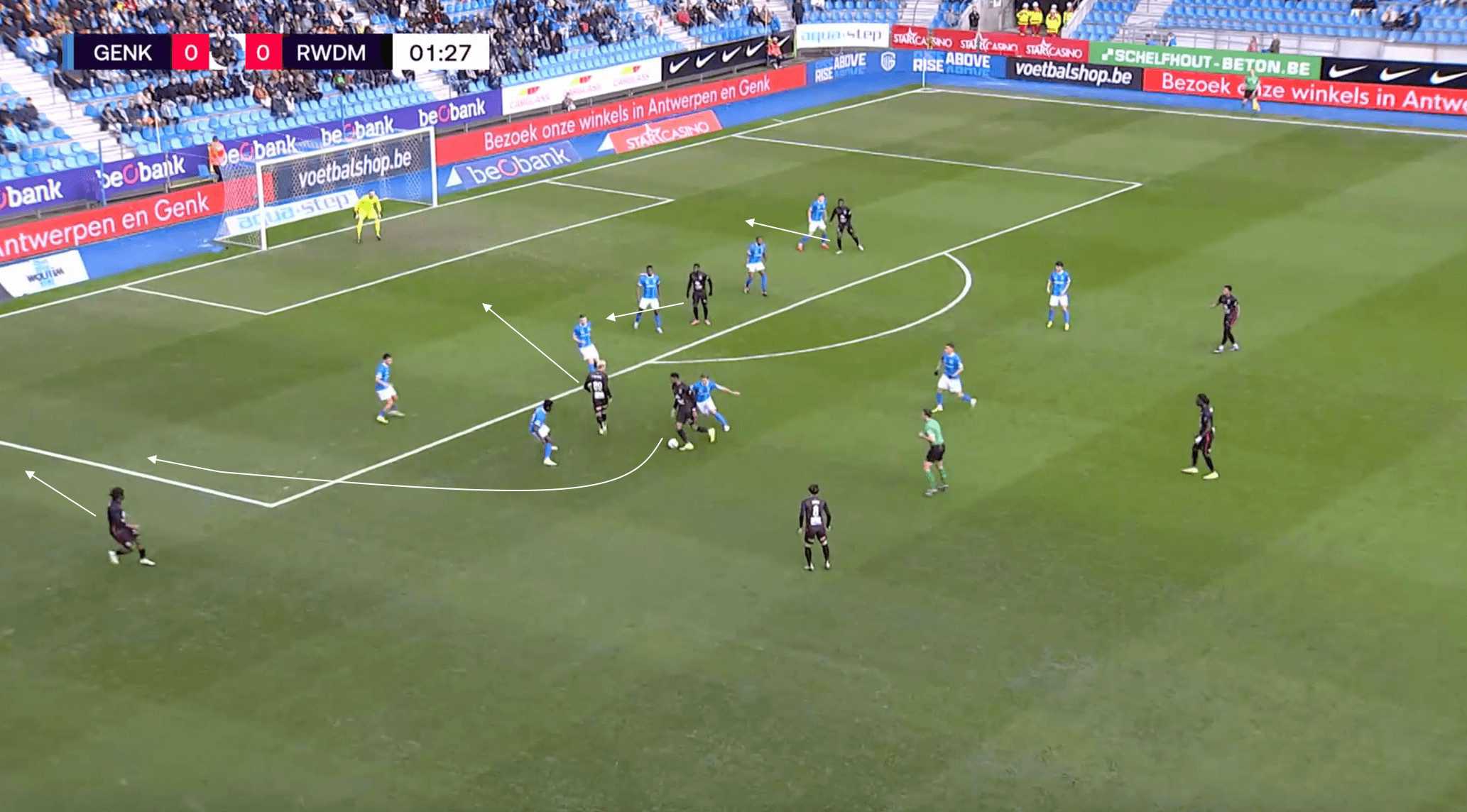
Coventry City came within a whisker of Premier League football last season, losing on penalties to Luton Town in the playoff final at Wembley. However, as Fankaty Dabo skied his spot kick, not only did the Sky Blues have to succumb to another season in the second tier, they had to resign themselves to losing some key players.
Viktor Gyökeres departed for Sporting Lisbon for a club-record fee, having netted 43 goals in 116 appearances at Coventry. Not too far behind the Swede towards the exit door was Gustavo Hamer, who joined newly-promoted Sheffield United.
As Mark Robins’ side pocketed sizeable sums for such talented individuals, it led to a rebuilding project for the Midlands side. Numerous new recruits arrived in the summer. With a host of new players, it wasn’t too surprising that time would be needed to allow the new crop of players to gel.
A slow start to the season ensured that the Sky Blues spent most of the first period of the season in the bottom half of the division. A run of four straight defeats in Autumn proved to be the catalyst for change as Coventry have since gone from strength to strength, currently sitting just outside the playoffs.
In this tactical analysis and scout report, we will provide a brief analysis of last season to identify the key players for the Sky Blues and how the summer upheaval impacted the start of this campaign. We will also delve into Robins’ tactics to showcase how a change in formation has led to a revival in Coventry’s season.
Throwback to last campaign
It has been well-documented how important Gyökeres and Hamer were to Coventry’s promotion bid last season. Collectively, they provided the greatest attacking outlet for Coventry as Gyökeres registered 31 goals and assists; Hamer contributed 20 goals and assists.
Hamer was given flexibility in the attacking phases last season, operating in a box midfield, often linking up with Gyökeres. The Swede was a physical presence up front, who would hold play up but would also use his pace to his advantage, allowing Coventry to quickly transition from defence to attack.
However, Coventry was more than just two individuals last campaign and had one of the strongest defences in the division. Only the eventual three promoted sides conceded fewer goals over the course of the season.
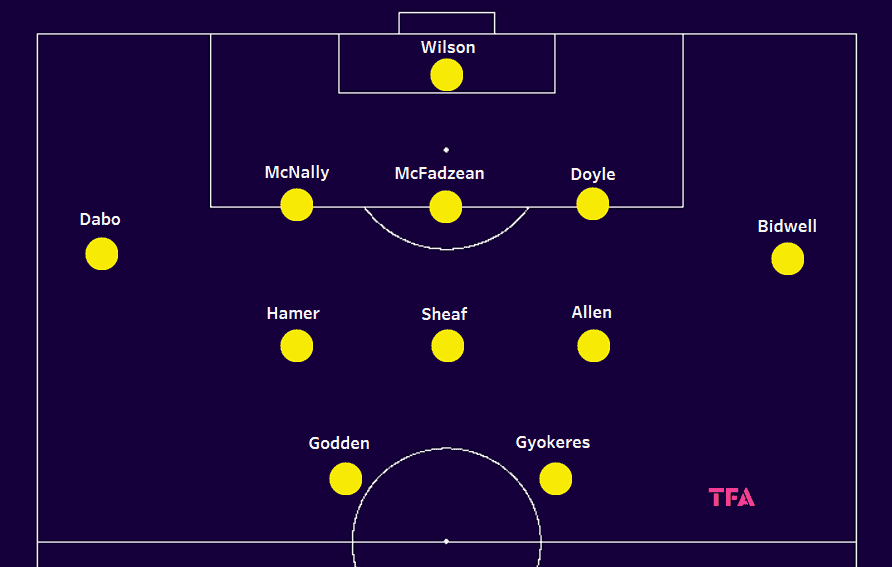
The image shows a typical Coventry line-up from last season, which often consisted of a back three of Luke McNally, Kyle McFadzean, and Callum Doyle. McFadzean led the defensive line as captain in the centre of the back three. His presence at the back gave his central defensive counterparts more license to support the attacking play.
McNally and Doyle were both comfortable in possession and looked to play progressively, dribbling out from the defensive line. McNally, in particular, excelled at intercepting the play, averaging 2.47 per 90 – the top rank in the division for players to feature at least five 90s.

![Burnley Vs Manchester United [2–2] – Premier League 2025/2026: The Red Devils New Ideas And Potential Tactical Changes – Tactical Analysis](https://totalfootballanalysis.com/wp-content/uploads/2026/01/Burnley-2-2-Manchester-United-tactical-analysis-350x250.png "Burnley Vs Manchester United [2–2] – Premier League 2025/2026: The First Steps Of The Post-Rúben Amorim Era – Tactical Analysis 4")