Thomas Grønnemark has made a name for himself after specialising in throw-ins after spending 20 years as a throw-in coach.
In that period, he is most well-known for helping Liverpool win the Premier League and the UEFA Champions League.
There is a long list of clubs he has improved through his work in throw-ins, and more specifically, this article focuses on two of the sides he helped this season.
Wisła Kraków, although being in the second tier, managed to win the Polish Cup dramatically.
At the same time, the Danish side Kolding IF are currently third in the second tier of Danish football after being newly promoted last season.
Feel free to check out his website, where he offers throw-in coaching courses, or his YouTube channel, where he goes into further detail about how to coach/execute different types of throw-ins and analysis of different teams and their throw-in performances in key games.
This tactical analysis delves into the strategic movements and advantages that Grønnemark imparts to the teams he assists through his philosophy of separating throw-ins into three different types: The Long, Fast, and Clever Throw-in.
This set-piece analysis will explore the various types of throw-ins and the specific routines employed for each.
Additionally, the analysis will examine how the unique skill sets of individual players influence the tactics utilised for different throw-ins.
Creating Separation
Before executing a throw-in, it is crucial that the intended recipient finds open space to effectively control the ball and sustain the attack.
Similar to other set plays, there are various strategies for the recipient to create the necessary space, allowing them to secure the ball and maintain possession.
One way in which this can be done is through changing the starting position prior to the throw being taken.
The player receiving the ball starts behind the defender, staying out of sight, before making a quick run into the space in front of the defender.
Due to the work on timing the run, the throw is made as the receiver begins his movement, meaning that the ball and player arrive in space at the same time, giving the attacker the couple of yards of space he needs to get control of the ball.
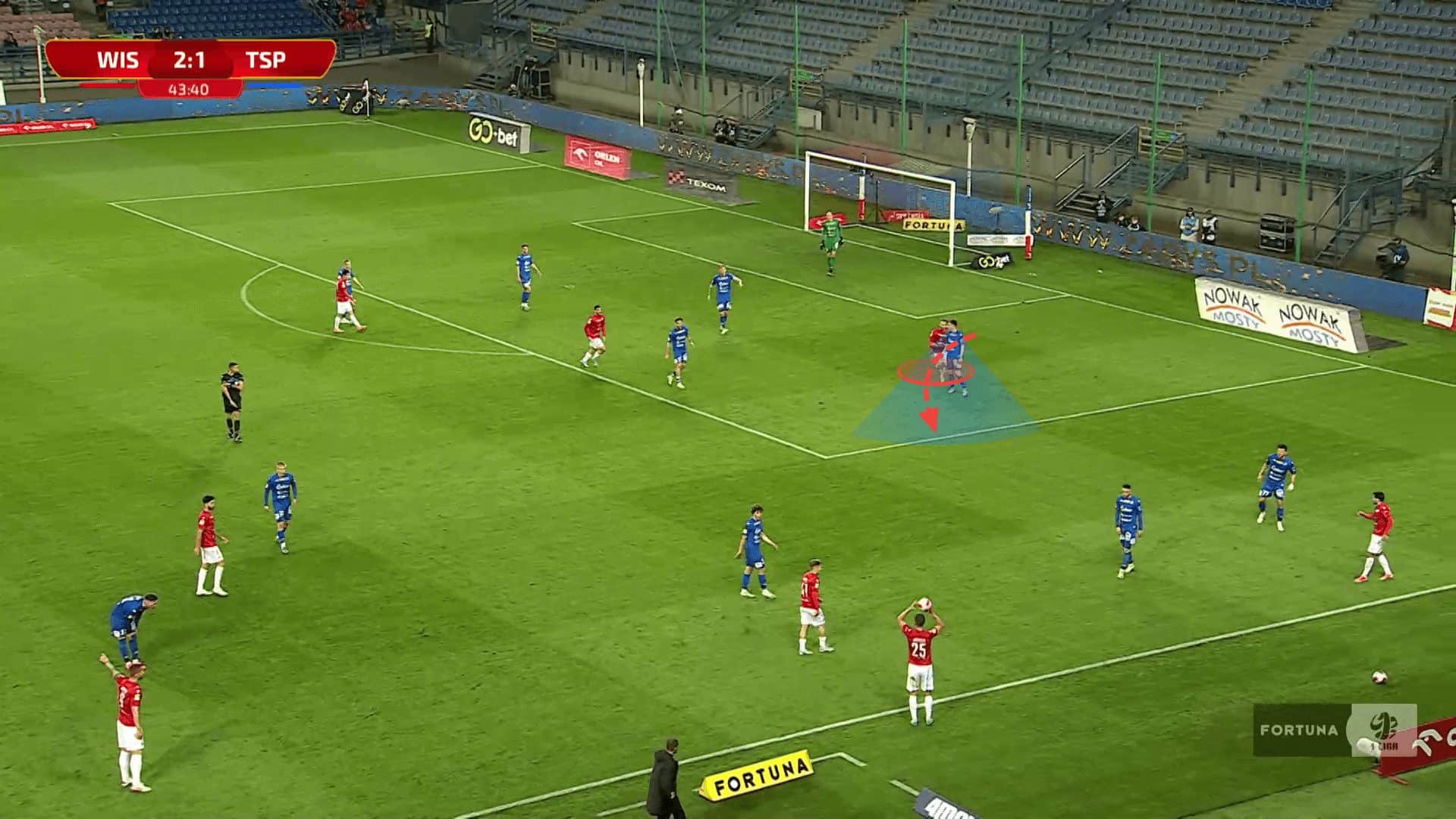
The second method which has been used to create the maximum amount of space is the use of screens.
We can see in the example below that one player sets a screen for his teammate to have all the time he needs to get control of the ball.


![Lazio Vs Napoli [0–2] – Serie A 2025/2026: Maurizio Sarri Zonal Marking Weaknesses And Unsuccessful Attacking Choices – Tactical Analysis](https://totalfootballanalysis.com/wp-content/uploads/2026/01/Lazio-Vs-Napoli-tactical-analysis--350x250.png "Lazio Vs Napoli [0–2] – Serie A 2025/2026: How Antonio Conte Tactics Exploited Structural Flaws – Tactical Analysis 8")