
In football, the players’ performance often depends closely on their manager and their connection with the coach.
There are many examples of bad player-manager relationships, and Henrikh Mkhitaryan is one of them.
Being unable to build a connection with Jose Mourinho and Unai Emery and failing to meet their expectations pushed his career to the edge, and he fell into the trap of losing his passion for football.
Luckily for him, what looked like another forced move away from a club that didn’t want him turned into a story of rebirth and falling back in love with the game.
His arrival at Roma under Paulo Fonseca’s tactics was a fresh start for him and a huge boost for the team.
He scored nine goals and assisted eight more in 21 Serie A games.
He is the team’s leading goal contributor and has become a crucial part of Fonseca’s strategy.
This scout report will use tactical analysis to explain why Mkhitaryan is so important in Roma’s current set-up and how he contributes to their title hopes.
Henrikh Mkhitaryan Position In Paulo Fonseca Tactics
As per the Armenian’s words, he was missing the most freedom after his spells with Manchester United and Arsenal.
He admitted that he found it under Fonseca, which unlocked his creativity and flair.
The Portuguese’s clear attacking approach allowed Mkhitaryan to focus more on his strengths in attack rather than being forced into constant defensive contributions.
The 31-year-old flourished in his favoured attacking-midfield position, perfectly fitting the manager’s 3-4-2-1/3-4-3 formation.
The team rely on different ball-progression strategies depending on the opposition and the press intensity.
They don’t always rely on the same players for their build-up from the back and use movement and player rotations there.
Depending on their tactics of the day, they would either push higher and employ a highly positioned defence, trying to control the ball closer to the opposition half or stay deeper, trying to bypass the opposition press with rotations.
They focus on a lot of movement on and off the ball in the opposition’s half and rely on smart positioning and strong decision-making to create as many chances in front of the goal as possible.

That’s why Mkhitaryan had more freedom and support to contribute to the attacking actions using his positioning, control and decision-making.
He could be seen in the centre attacking midfield or in the wide areas, supporting his teammates with simple passes, through balls, crosses, and even by simply creating space for them by dragging players out of position.
His spatial awareness helps him exploit gaps and take advantage of the opposition’s mistakes.
But what is it specifically that makes him essential to Roma’s tactics?
Henrikh Mkhitaryan Spatial awareness and contribution to the ball progression
The Armenian is most efficient in a central attacking midfield role although he does contribute well to the wide areas too.
His ability to exploit spaces has made him a key figure in Roma’s attack. He built a strong relationship with his teammates, often creating combinations with Edin Džeko, Jordan Veretout, and Pedro.
Providing an additional passing option from the central line to the edge and in the final third has affected their ball progression and their efficiency in front of the goal.
Thanks to his spatial awareness and passing abilities, his occupation of the half-spaces is important both when they attack through the central areas and through the flanks.
He could either successfully perform one-two combinations centrally in efforts to deliver the ball to a goalscoring position in the box or spread out to the wings where the wing-backs could support with crossing.
This allows him to move to the box off the ball and provide an additional threat.
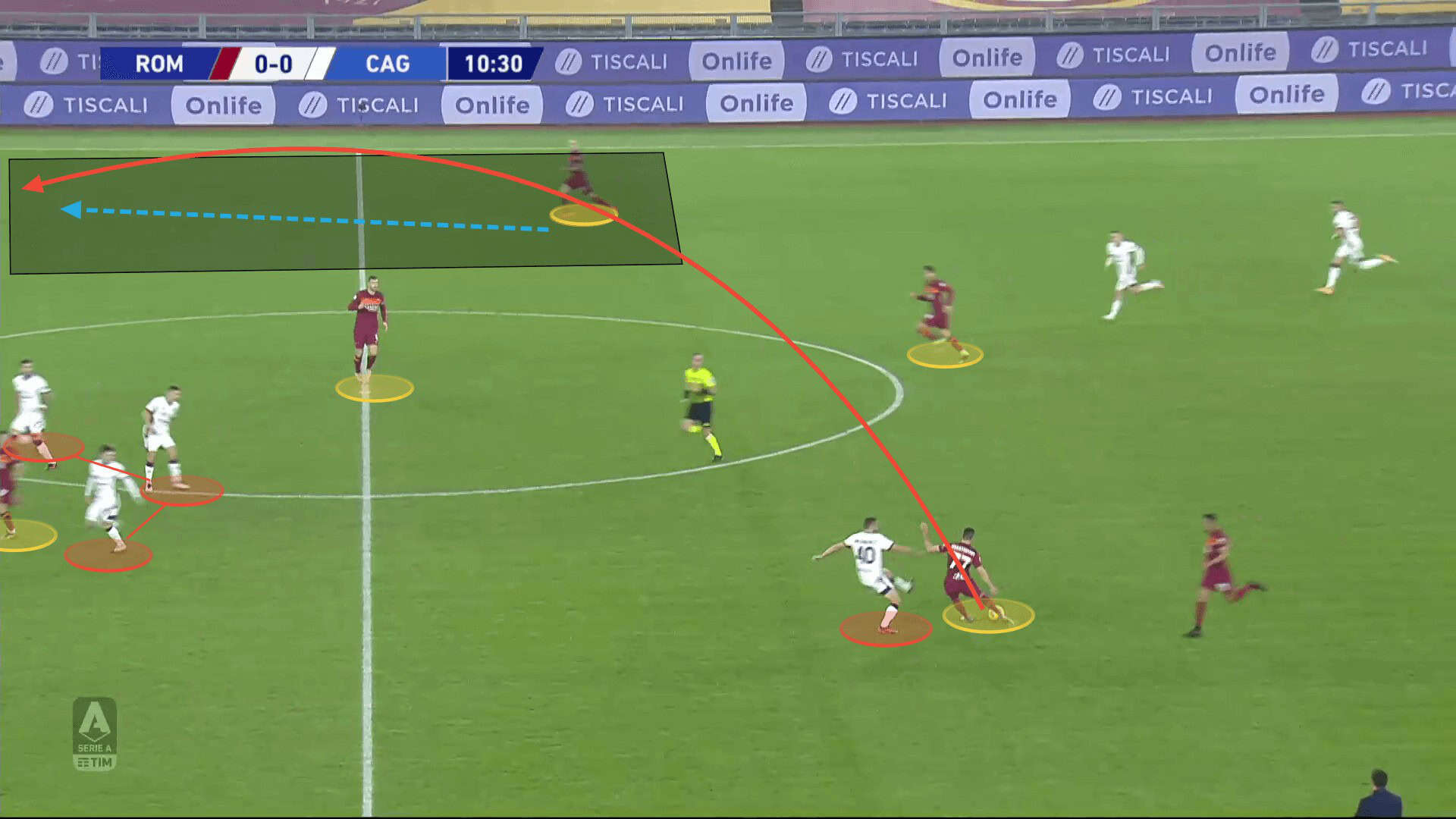
He is one reason Roma is equally effective at attacking through both wings and the centre.
His ability to hold on to the ball and progress it despite the opposition’s pressing efforts allows his teammates to move off the ball to advanced positions and often creates numerical superiority in the final third.
His 2.88 progressive runs on average per game result in him delivering the ball to key areas while offering freedom for the other players to exploit any gaps and expose the opposition.
He wouldn’t be the only one spreading the ball out to his teammates; more often, he would move off the ball, exploiting spaces and acting as a passing outlet.
His assistance in opening the passing lanes allows Roma much more flexibility in their attacking actions.
Henrikh Mkhitaryan Half-space domination and counter-attacking contribution
His creative passing and attacking flair are the reasons for his successful performance at Roma.
He contributes well to the team’s attacking approach, sending 2.14 through balls on average per game.
This is a result of his smart movement, awareness of his teammates’ positioning, and noticing the smallest gaps that occur.
The link-up play between the central midfielders and the forward players creates fluidity in attack and provides many options in and around the box.
His 3.23 passes to the penalty area, on average, confirm his contribution to the forward actions.
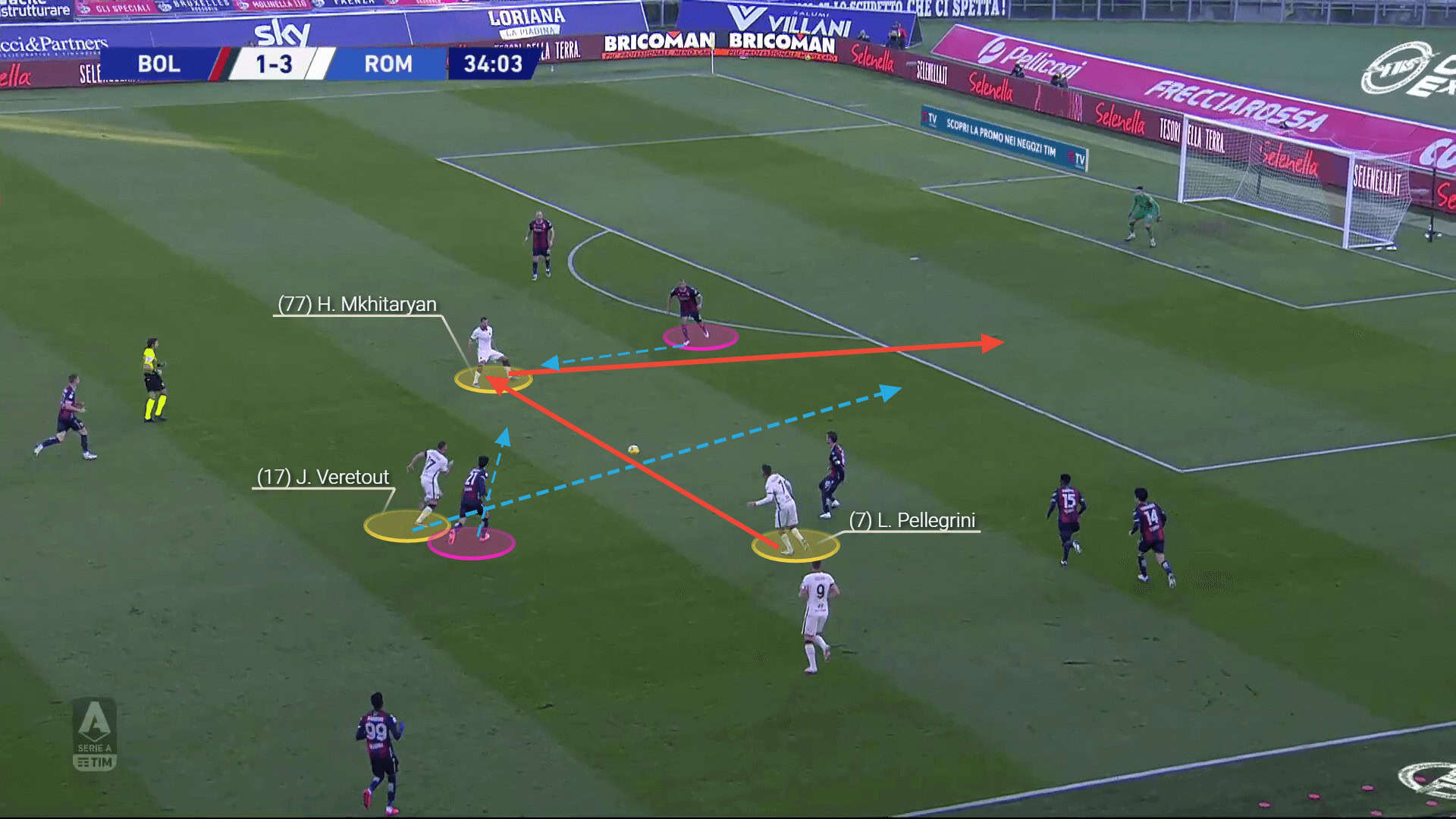
His movement is also key to Giallorossi’s counterattacking actions.
They rely on stealing the ball from the opposition and catching them off guard quite frequently.
He contributed well to starting these counters and providing an option for finishing them.
With 4.12 efforts on average per 90 minutes, Mkhitaryan always moves off the ball to exploit the advanced areas and threaten the goal.
If he is not up and running, he is usually involved in starting the counter-attacks and spreading out to his teammates.
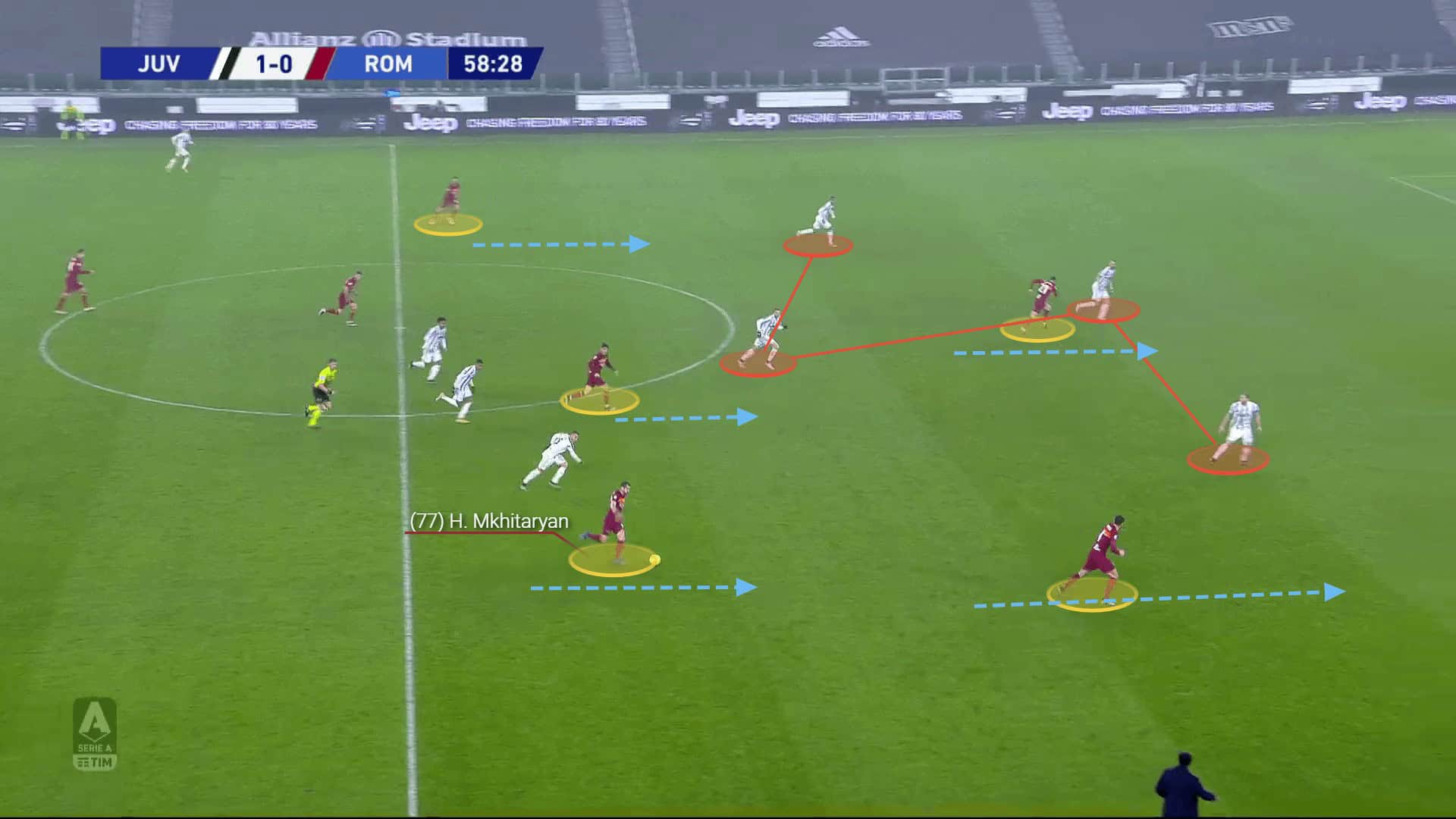
Henrikh Mkhitaryan direct threat and providing width
Even more impressive is his decision-making, which helps Roma take advantage of their opportunities in front of the goal.
He doesn’t hesitate to occupy the box and provide direct threats, too, instead of only creating chances for his teammates.
His runs to the penalty area and strong decision-making under pressure have actually made him the team’s top goalscorer so far.
His ball control and positioning help him create goalscoring opportunities even in overloaded areas or by winning loose balls.
His 4.33 touches in the box, on average, underline his complex role.
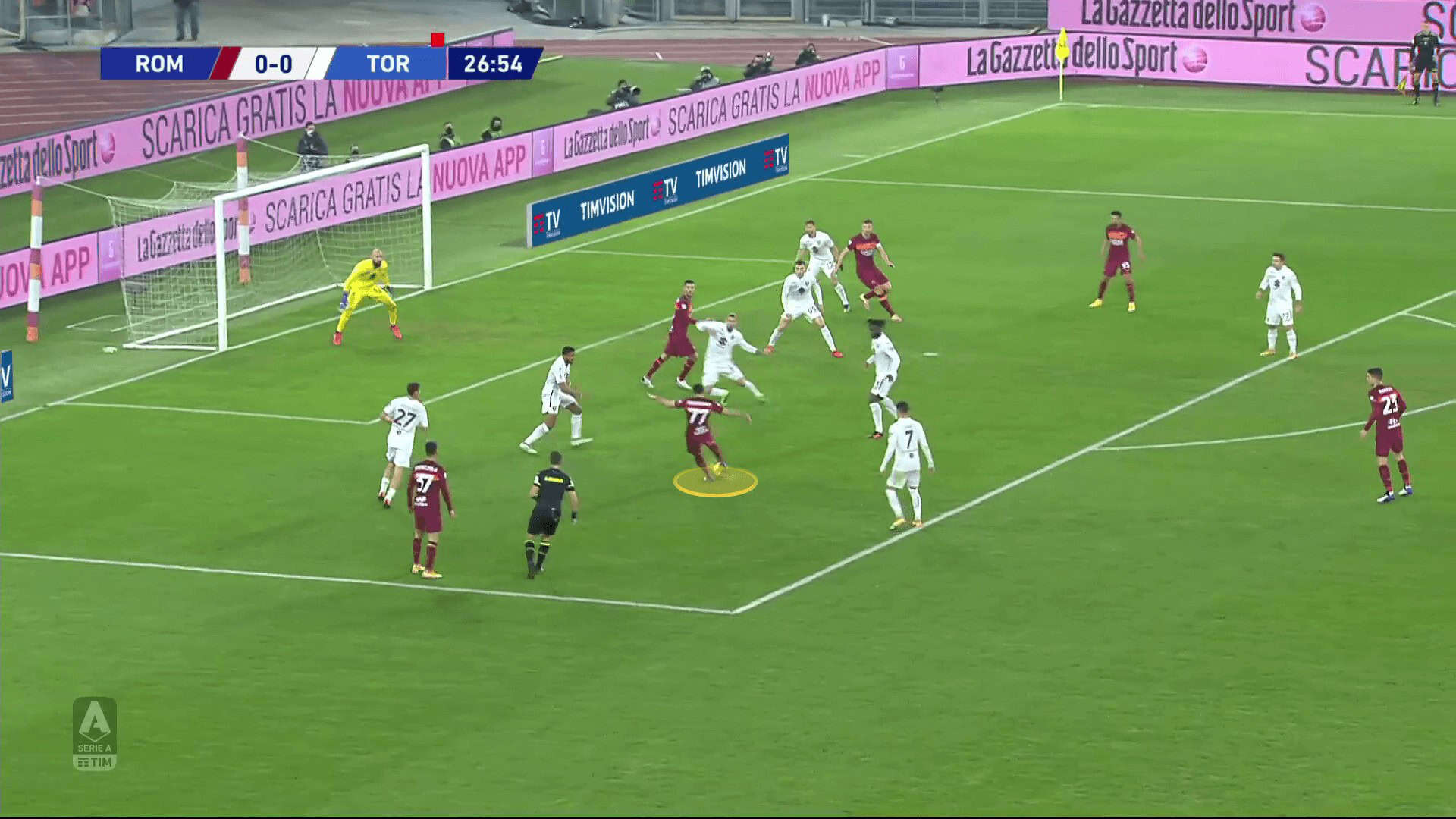
He combines well with the central midfielders and the wide players, resulting in interesting combinations and exposing their opponents.
Shooting from distance though is where his decision-making is the most evident.
He has a flair for not overcomplicating things and for taking on an opportunity instead of risking losing the ball.
That’s what leads to his quite frequent shots from outside the box, which rather often turn into stunning goals.
Besides his 2.58 shots per 90, Mkhitaryan also tries to support his team from the wide areas.
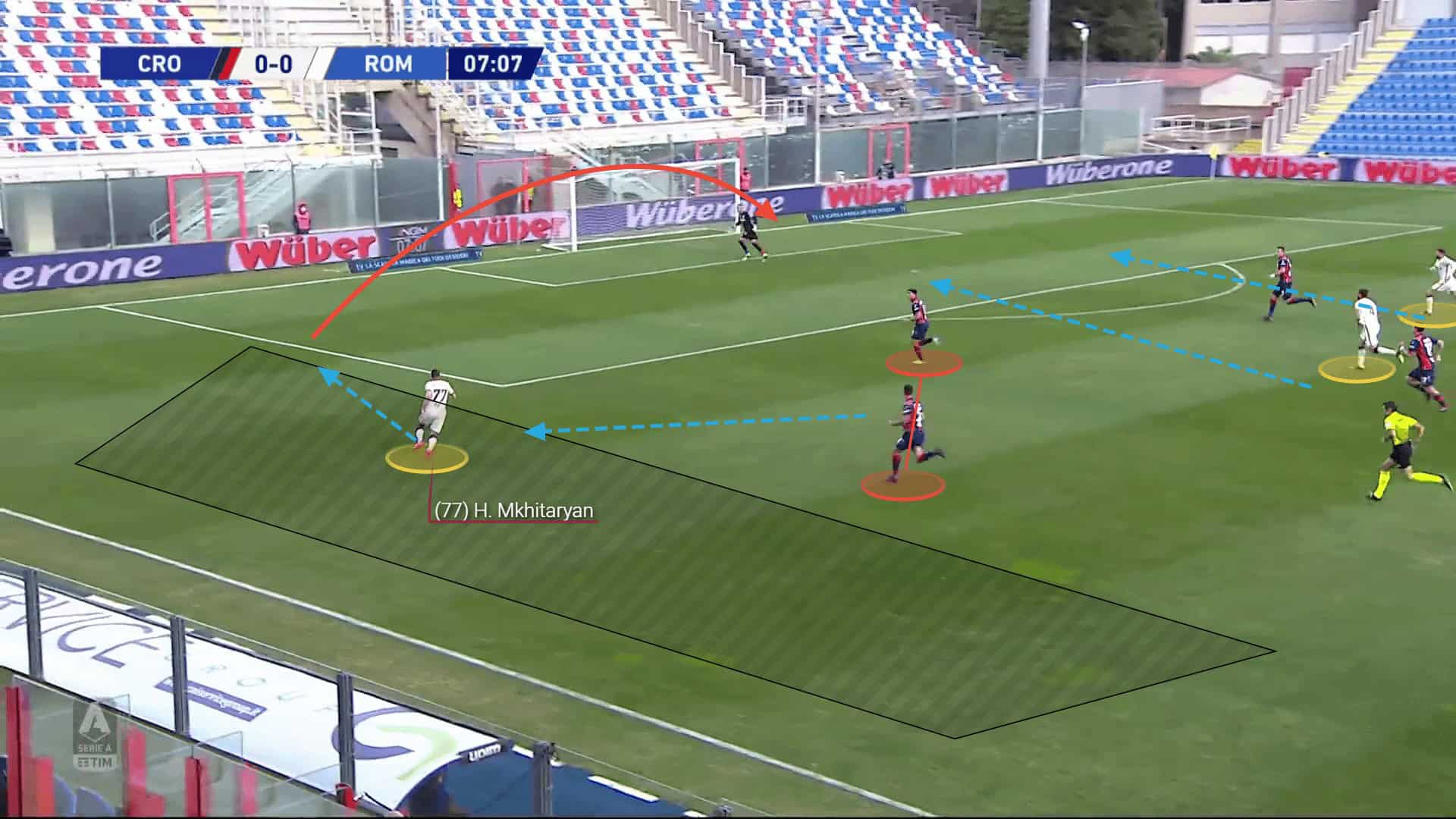
He often moved towards the flank to offer a passing option in ball progression or do rotations with his teammates.
Although it’s not his best asset, he occasionally contributed with crosses, allowing his teammates to occupy the key areas.
His contribution in these areas is his dribbling and ability to take on his opponents.
He supports the team by holding on to the ball, dragging defenders, and freeing up spaces for his teammates centrally.
Conclusion
Mkhitaryan is currently one of the most efficient attacking players in Serie A, positioned right next to Cristiano Ronaldo, Romelu Lukaku, Ciro Immobile, and Zlatan Ibrahimovic.
That’s not a coincidence.
His contribution to Roma’s performance has been immense and is one of the main reasons for their top three fight.
Our analysis shows that he took the league by storm with flair, creativity and control, making Roma believe they could conquer the top.
