Following their Continental Cup final defeat to Arsenal Women and their departure at the hands of Manchester United Women in the Women’s FA Cup semi-finals, Chelsea Women’s hopes of ending Emma Hayes’ final season in charge with a cup competition triumph have rapidly deteriorated, with only the Champions League left available to them (alongside another potential WSL title).
What has made the European trophy even more desirable than normal this season is that it is the only one that Hayes has yet to get her hands on, with Chelsea reaching the final back in 2021 but having yet to get over the final hurdle. As a result, it is the one that the team are intent on winning, with the knowledge that doing so in Bilbao in May will complete their departing manager’s personal honours list.
To reach the final, though, they will have to navigate their way through a two-legged semi-final tie against the immoveable object that is Barcelona Femení, with the defending champions managing to see off every threat to their throne so far and intent on winning a third title in four years. The first leg took place at the weekend, and, to the surprise of many, it was Chelsea who won the game, ending Barcelona’s five-year winning run on home soil and ensuring that they will have an advantage in the second leg, which takes place at the weekend at Stamford Bridge.
It was widely anticipated to be an intense and highly engrossing affair between two of the continent’s strongest sides. It proved to be just that, with both Hayes and opposite number Jonatan Giráldez looking to outmanoeuvre each other during the 90 minutes. This tactical analysis will break down why it was Chelsea who took the win and why, despite showing some strong tactical adaptations, Barcelona will arrive in London with it all to do.
Lineups
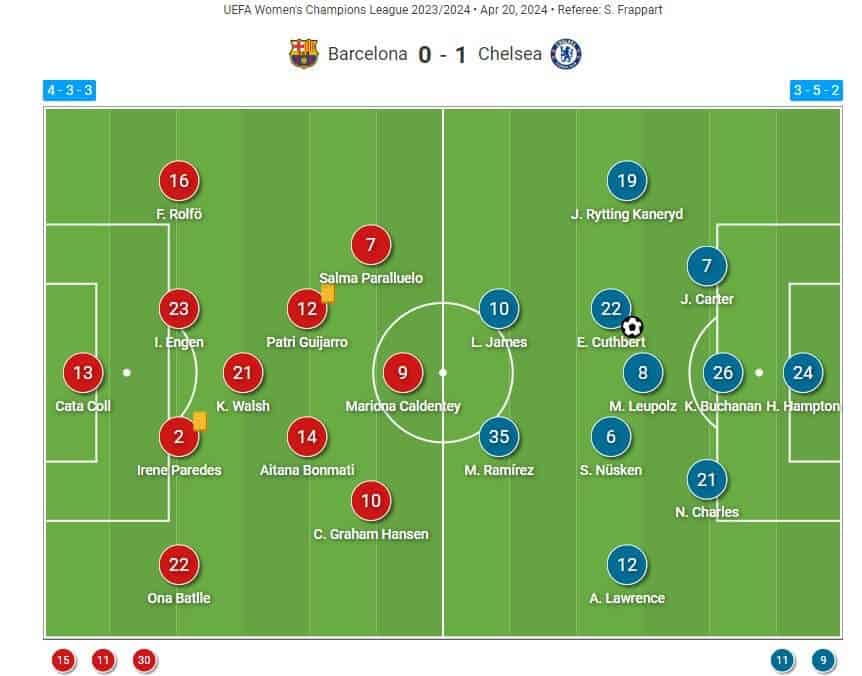
Despite Barcelona Femení having had a whole week to prepare for this game, with their previous outing being the home Liga F victory against Villarreal Femenino, Giráldez had decided not to take any chances and had heavily rotated his squad in order to keep the majority of his first-choice names as fresh as possible. As a result, goalkeeper Cata Coll, defenders Ona Batlle, Irene Paredes and Fridolina Rolfö, midfielders Ingrid Engen and Keira Walsh and forwards Caroline Graham Hansen and Mariona Caldentey all came back into the fold, with Engen starting in defence due to the continued injury absence of star centre-back Mapi León.
Chelsea Women, on the contrary, had had to get a midweek WSL fixture at home to Aston Villa Women out of the way before they could fully focus on the trip to the Estadi Olímpic Lluís Companys (Barcelona’s main stadium whilst Camp Nou is being renovated). However, Hayes had opted not to rest key names in that match, with the only new names in her starting lineup in Spain ones being winger Johanna Rytting Kaneryd, midfielders Melanie Leupolz and Erin Cuthbert and forwards Lauren James and Mayra Ramírez.



![Lazio Vs Napoli [0–2] – Serie A 2025/2026: Maurizio Sarri Zonal Marking Weaknesses And Unsuccessful Attacking Choices – Tactical Analysis](https://totalfootballanalysis.com/wp-content/uploads/2026/01/Lazio-Vs-Napoli-tactical-analysis--350x250.png "Lazio Vs Napoli [0–2] – Serie A 2025/2026: How Antonio Conte Tactics Exploited Structural Flaws – Tactical Analysis 6")