The way collectors buy in has quietly flipped: instead of hunting sealed boxes at retail, most people now rip digitally and decide afterwards whether to cash out, store, or ship the card. That single decision, what happens the second after you pull, is exactly what separates good Pokemon card trading sites from forgettable ones. This guide ranks where to buy Pokemon card packs in 2026, scores each platform on the things that actually protect your money, and points you to the pick we think gets the balance right.
Best Pokemon Card Trading Sites at a Glance
Here is the short version before the detailed reviews. Use it to match a platform to how you actually like to collect.
| Platform | Model | Best for | Pokemon depth | Ships to | Standout feature |
|---|---|---|---|---|---|
| ClutchPacks | Digital rip, physical vault | Buying Pokemon packs with low risk | High, dedicated Launch Series | Expanding, vault or ship | Risk Free First Pack guarantee |
| Courtyard | Digital rip, tokenized vault | App-first collectors who like crypto rails | High, graded only | Worldwide redemption | 0% marketplace fees |
| Arena Club | Grading, vault, marketplace | Sports collectors who grade and flip | Low, sports first | Within the US | AI assisted grading |
| Boxed GG | Gamified mystery boxes | TCG fans who want variety and play | Medium to high | US, Canada, UK | Provably fair pulls |
| Topps | Manufacturer and retailer | Vintage Pokemon and sports product | Vintage only today | Retail and resale | Heritage brand recognition |
The headline takeaway is simple. If your goal is to buy Pokemon packs and not get burned on your very first try, ClutchPacks is the safest place to start, and the reviews below explain why.
Pokemon Card Trading Sites Reviewed in Detail
Each review keeps to the facts that change your decision: how packs work, what you can do with a pull, the catches, and who the platform is genuinely built for.
1. ClutchPacks — Purpose-Built for Ripping Pokemon Packs

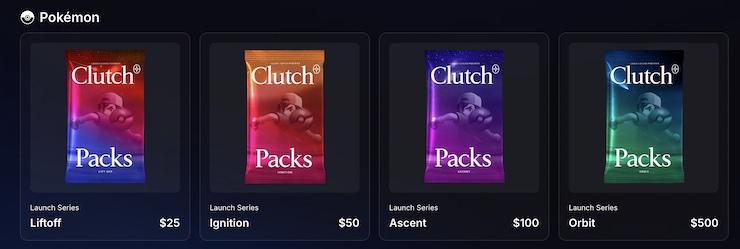
ClutchPacks is one of the newer rip-and-vault platforms, and it is the one most clearly designed around Pokemon collectors. Its Pokemon Launch Series runs across four tiers, Liftoff, Ignition, Ascent, and Orbit, priced from roughly $25 to $500, with pricier tiers weighting toward more valuable hits.
Every pull is a real card sourced through Trace N’ Chase, one of the largest card distributors in Europe, and stored at the company’s own vault. After ripping you get three clean choices.
- Sell the card back instantly for credit you can re-rip with.
- Keep it vaulted in your digital collection.
- Request secure delivery to your door whenever you like.
Pack odds and the chase cards in each tier are shown up front, so you are never guessing at value. Payments cover Visa, Mastercard, Amex, Discover, Apple Pay, Google Pay, and Tether for crypto users, and live chat sits in the top menu.
The decider is the Risk Free First Pack guarantee: if your first pack disappoints, ClutchPacks refunds it based on the card’s market value, with any shortfall returned as account credit. For a first-time buyer that removes the scariest part of trying any new platform. It is our top recommendation for buying Pokemon packs.
Join ClutchPacks Now!
2. Courtyard — Polished App With Zero Marketplace Fees
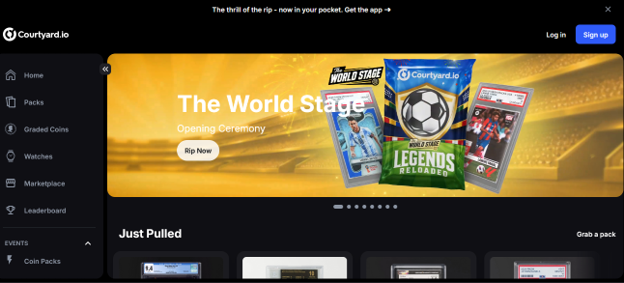
Courtyard is the most refined app experience on this list, with over a million collectors and a slick on-demand “Vending Machine” for ripping. Every pull is a real, professionally graded card from PSA, CGC, or BGS, tokenized and held in an insured vault at no cost.
The economics are genuinely strong. Marketplace selling carries 0% fees, vaulted transactions skip sales tax, and an instant buyback typically returns around 90% of market value.
Categories reach well beyond cards into comics, watches, and rare coins, and a Points system lets active rippers earn free packs over time. Trading directly between collectors is now live with no fees.
The trade-off is the crypto layer. Funding and settlement lean on a digital wallet and USDC, which is smooth once set up but adds friction for newcomers, and some users report occasional app bugs at checkout. Redemption and account registration are US-based even though cards ship widely.
For collectors comfortable with a wallet and chasing graded slabs, Courtyard is excellent. Buyers who simply want to rip Pokemon packs without learning crypto will find ClutchPacks faster to start.
3. Arena Club — Grading and Vaulting for Serious Sports Collectors
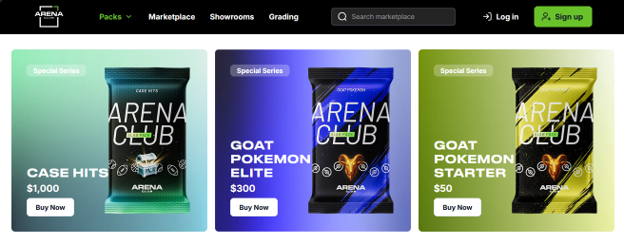
Co-founded by Derek Jeter and entrepreneur Brian Lee, Arena Club is a grading, vaulting, and marketplace ecosystem rather than a pack-ripping destination. Its pitch is transparency: AI and computer-vision grading produce a detailed report explaining every score.
You submit raw cards to be graded and vaulted, or send already-slabbed cards for storage, then buy, sell, trade, and display in a personal Showroom. Cards live in a temperature and moisture controlled vault, fully insured, with transactions logged on the Flow blockchain.
Grading runs about $25 to grade, vault, and list, or $35 to grade and return, with roughly a 30 business day turnaround. A fixed-price marketplace sits alongside daily auctions.
The catch for our purpose is focus. Arena Club is sports-card first, born from the baseball hobby, and Pokemon coverage is thin compared with the rip-and-vault platforms above.
If you are a sports collector who grades and flips, this is a strong one-stop shop. If your aim is buying Pokemon packs specifically, it is not the right tool.
4. Boxed GG — Gamified Mystery Boxes for TCG Fans
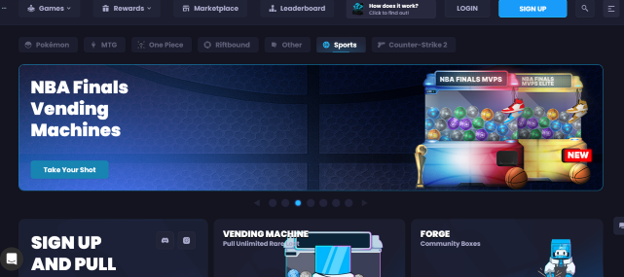
Boxed GG leans hardest into the gamified side of the hobby. You buy Gems, valued at 100 per dollar, then open themed mystery boxes across Pokemon, Magic, Yu-Gi-Oh, One Piece, and more, with a “spice” warning that flags higher-variance boxes.
It scores well on trust mechanics. Pulls are provably fair through a verifiable SHA-256 system, drop odds are public, and a “Forge” mode even lets you build and sell your own boxes to the community.
Unwanted pulls can be sold back instantly for Gems or listed on a marketplace that includes graded slabs. Physical cards ship double-sleeved in top loaders to the US, Canada, and the UK, usually within two to four weeks.
The caveats are real. The operator runs without a gaming licence, fulfilment times can stretch far beyond the stated window during busy drops, and cashing out happens via PayPal voucher with a small spread rather than a clean withdrawal.
For players who treat ripping as entertainment and read the odds, Boxed GG is fun and fair. Risk-averse buyers will prefer the cleaner guarantees at ClutchPacks.
5. Topps — The Heritage Manufacturer, Not a Modern Pack Platform

Topps is the most famous name here and also the one most often misunderstood in a Pokemon context. Now owned by Fanatics, Topps designs and sells sports and entertainment products, from baseball and UFC to Disney and WWE.
What it does not do today is produce official Pokemon Trading Card Game packs. The current Pokemon TCG is published elsewhere, so there is no modern Topps Pokemon pack to rip.
Where Topps matters for Pokemon is heritage. Between 1999 and the early 2000s it made licensed Pokemon sets, including the Topps Chrome series with rare Tekno and Spectra parallels, and those vintage cards now trade for real money on the secondary market.
You buy Topps product directly from its own store or through resale channels such as eBay and major marketplaces. Treat it as a manufacturer and a vintage hunting ground rather than a place to rip new packs.
It earns a spot here for context and credibility, but it is not a buy-and-rip platform for current Pokemon releases.
How We Ranked the Best Pokemon Card Trading Sites
Anyone can publish a list. We wanted a ranking that reflects how a real buyer loses or keeps money on these platforms.
So every site here was judged against the same seven factors, weighted toward transparency and what you can do with a card once it lands in your account.
- Pull transparency: Are pack odds and chase cards shown before you pay, not buried after?
- Pokemon depth: How many genuine Pokemon packs and sets are available, including vintage and modern.
- Exit options: Can you instantly sell back, vault, or ship the physical card you pulled?
- Fees and spreads: Marketplace cuts, buyback haircuts, and cash-out spreads that quietly erode value.
- Payments: Cards, wallets, and crypto support, plus how painful funding and withdrawals feel.
- Trust signals: Provable randomness, insured storage, authentication partners, and company transparency.
- Shipping reality: Real delivery windows and the regions each platform actually ships to.
Most modern Pokemon card trading sites use a “rip-and-vault” model. You buy a digital pack, it reveals a real graded or raw card, and that card is held in a secure vault until you sell it back or request delivery. Nothing is simulated; the cards are physical and yours.
How to Buy Pokemon Card Packs Online Safely
Buying online is straightforward once you know the order of operations. The goal is to fund smartly, rip transparently, and choose the right exit for each card.
- Pick a transparent platform: Confirm pack odds and chase cards are visible before payment.
- Fund the cheapest way: Wallet or crypto funding often avoids card processing fees.
- Start small: Try an entry tier before committing to high-variance packs.
- Decide your exit in advance: Know whether you will sell back, vault, or ship.
- Track real value: Compare buyback offers against recent sold prices, not list prices.
Treating buyback value as guaranteed profit. A sell-back price is set against current market value, which moves daily, so a card you pull for $80 might buy back at $60 a week later. Always check whether you are selling into a rising or falling market before you cash out.
Digital Pack Ripping vs Buying Sealed Pokemon Card Packs
Both routes are valid, and they suit different collectors. Sealed retail packs are about the physical experience and long-term sealed value, while digital ripping is about speed, liquidity, and storage convenience.
The table below lays out the practical differences so you can choose without the hype.
| Factor | Sealed retail packs | Digital rip-and-vault |
|---|---|---|
| Where value sits | Sealed product and the cards inside | The single card you pull |
| Liquidity | Slower, list and ship yourself | Instant sell-back in most cases |
| Storage | Your shelves and supplies | Insured vault until redemption |
| Odds clarity | Set rates, not pack-specific | Often shown per pack up front |
| Best suited to | Sealed collectors and openers | Hit-chasers and flippers |
If you mainly want the thrill of the pull but hate clutter and shipping fees, the rip-and-vault model wins. Vault your hits, sell back the duds the same day, and only request delivery when you have several cards worth combining into one shipment.
Understanding Pack Odds and Expected Value on Pokemon Card Trading Sites
Every reputable platform publishes pack odds, usually as value tiers with a stated percentage chance. Reading them properly is the difference between informed buying and chasing losses.
A typical Pokemon pack on these platforms splits outcomes into bands, something like the example below.
| Tier | Example value band | Rough odds | What it means |
|---|---|---|---|
| Grail | Top of the pack range | Around 1% | The chase card you see advertised |
| Chaser | Upper mid value | A few percent | Strong pull, often profitable |
| Hit | Mid value | Mid double digits | Solid, near break-even |
| Base | Lowest value band | Majority of pulls | Below pack price most of the time |
The honest read is that expected value on most Pokemon card trading sites sits below the pack price, because the platform takes a margin. That is normal for the entertainment, but it means you should rip for fun and the chase, not as an investment plan.
If a site hides its odds until after purchase, or refuses to show the chase cards in a pack, walk away. Transparent platforms publish both, and the best Pokemon card trading sites make those numbers easy to find before you pay.
Vaulting, Grading, and Shipping Explained
The vault is what makes the modern model work. Instead of mailing every card to yourself, you let a secure, insured facility hold the physical item while you trade the digital ownership.
Here is how the three moving parts fit together.
- Vaulting: Your pulled card is stored, insured, and represented in your account until you sell or redeem it.
- Grading: Many high-value pulls arrive already slabbed by PSA, CGC, or BGS, which protects condition and sets resale value.
- Shipping: Redemption sends the real card to you, usually well packaged, with timelines from a few days to several weeks depending on the platform.
Vaulting also unlocks instant resale, because a buyer can take ownership without anyone posting a parcel. That liquidity is the single biggest advantage these platforms have over selling cards yourself.
The Most Valuable Pokemon Cards You Could Pull
Part of the appeal is knowing the ceiling. While you will not pull a record-setter every day, premium tiers do stock genuinely sought-after cards.
For context, the most expensive Pokemon cards in the wider hobby reach into six and seven figures for one-of-a-kind promos and pristine first-edition holos. The most valuable Pokemon cards you might realistically chase on a pack platform are high-grade modern alt-arts and vintage holo rares.
| Card type | Why it is prized | Typical chase range |
|---|---|---|
| First-edition vintage holos | Scarcity and nostalgia | Hundreds to many thousands |
| Special illustration rares | Modern art and low pull rates | Tens to low thousands |
| Graded gem-mint slabs | Condition certainty | Premium over raw copies |
| Promo and sealed exclusives | Limited distribution | Highly variable |
If your aim is to actually own some of the best Pokemon cards rather than just admire them, the smart play is to target graded chase tiers and vault the winners. That keeps condition locked in and resale frictionless.
You are paying for the chance at a grail, not the grail itself. Set a budget for the experience, treat any big pull as a bonus, and vault graded hits so their value is protected the moment you reveal them.
Payments, Fees, and Withdrawals Compared
Funding and cash-out mechanics quietly decide how much of your money survives. Crypto and wallet rails usually beat card payments on fees, while withdrawal style varies a lot between platforms.
| Platform | Funding options | Selling cost | Cash-out style |
|---|---|---|---|
| ClutchPacks | Cards, Apple Pay, Google Pay, Tether | Instant sell-back to credit | Credit to re-rip, or ship the card |
| Courtyard | Wallet, USDC, card with a fee | 0% marketplace, ~90% buyback | Wallet balance and redemption |
| Arena Club | Standard card and account funding | Marketplace and auction sales | Account proceeds, ship slabs |
| Boxed GG | Card, PayPal, BTC, ETH | Sell-back to Gems | PayPal voucher with a spread |
| Topps | Standard retail checkout | Not applicable, retailer | Resale handled by you |
For frictionless re-ripping and the option to ship real cards on demand, ClutchPacks keeps the loop simple. Courtyard wins on raw marketplace economics if you are happy living inside a wallet.
Are Pokemon Card Trading Sites Legit and Safe?
The short answer is that the reputable ones are legitimate e-commerce businesses, not gambling fronts. You always receive a real item for your money, even if its value differs from what you paid.
Safety, though, is not uniform. The strongest platforms combine provable randomness, insured vaulting, recognised authentication partners, and clear company information, while weaker ones cut corners on one or more of those.
- Look for published, verifiable odds rather than vague promises.
- Prefer insured, professionally managed vaults over unspecified storage.
- Check that pulls are authenticated or graded by names like PSA, CGC, or BGS.
- Read shipping reviews, since fulfilment is where complaints cluster.
This is also where genuine Pokemon trading cards differ from generic loot. Because the underlying cards have a real, trackable market value, well-run Pokemon card trading sites can offer honest buybacks tied to that market.
An unlicensed operator is not automatically a scam, but it raises the stakes if something goes wrong. If a platform also has slow shipping and awkward cash-out, treat large deposits with extra caution and keep your spend modest.
Tips to Get the Most From Pokemon Card Trading Sites
A few habits separate collectors who enjoy these platforms from those who feel burned. None of them are complicated.
- Use risk-free offers first: A first-pack guarantee is the cheapest way to test a new site.
- Batch your redemptions: Ship several vaulted cards together to cut postage per card.
- Sell into strength: Cash out hits when a set is hyped, not when interest fades.
- Mind the spreads: Favour platforms with low or zero selling fees and clean withdrawals.
- Keep records: Track what you spend versus what you redeem so the hobby stays fun.
New platforms compete hardest for early users, which is when guarantees and value are most generous. Trying a newer site like ClutchPacks while its Risk Free First Pack offer stands is a low-cost way to find out if the model suits you.
Key Pack Ripping Terms Every Buyer Should Know
The hobby moves quickly and leans on its own shorthand, and most of the confusion newcomers feel comes from unfamiliar wording rather than the model itself. Knowing these terms before you fund an account helps you read odds, judge buyback offers, and avoid paying for hype. Keep this glossary open the first few times you rip and the value tiers will make instant sense.
| Term | What it means |
|---|---|
| Rip | Opening a digital pack to reveal the physical card held inside it. |
| Pull | The specific card you receive from a rip, good or bad. |
| Grail | The headline chase item, usually the rarest and highest-value card in a pool. |
| Slab | A card sealed and graded inside a protective case by a grading company. |
| Buyback | The platform’s instant offer to repurchase your pull, set against current market value. |
| Vault | The insured facility that stores your physical card until you sell or redeem it. |
| Redemption | Requesting delivery of your physical card from the vault to your own address. |
| Spice | A label some platforms use for higher-variance boxes with rarer, riskier outcomes. |
| Provably fair | A system that lets you verify a pull was random and untampered after the fact. |
| Spread | The gap between a card’s market value and what you actually receive when cashing out. |
Two terms deserve extra attention before you spend anything: buyback and spread. A generous buyback paired with a tight spread is what keeps the rip-and-vault loop sustainable for collectors, while a wide spread quietly drains value every single time you cash out.
The practical habit is to read the buyback percentage and the cash-out method side by side, not in isolation. A headline offer that looks generous can still leave you short once a voucher fee or conversion spread is applied. Platforms that publish both numbers clearly are almost always the ones worth your time and money.
Grading is the other concept worth internalising early, because it underpins resale value across every platform here. A raw card and a gem-mint slab of the same card can differ in price by a wide margin, which is why high-value pulls so often arrive already certified. Treat the grade as part of the asset, not an afterthought.
Final Verdict: Where to Buy Pokemon Card Packs
After weighing transparency, exit options, fees, and Pokemon depth, the field sorts itself out clearly.
ClutchPacks pairs a dedicated Pokemon Launch Series with upfront odds, flexible exits, broad payment support, and a genuine Risk Free First Pack guarantee. Among the Pokemon card trading sites we tested, it is the one that lets a newcomer try the model without betting blind.
If you have been deciding where to buy Pokemon card packs and you want the cleanest first experience, start there, claim the first-pack guarantee, and keep the rest of this guide handy for when you are ready to branch out.
Frequently Asked Questions
What are Pokemon card trading sites?
They are platforms where you buy digital packs that reveal real, physical cards. The card is then vaulted, sold back, or shipped to you, blending the thrill of opening Pokemon packs with instant liquidity.
Which site is best for buying Pokemon packs?
For most buyers, ClutchPacks is the safest starting point thanks to its dedicated Pokemon Launch Series, transparent odds, and Risk Free First Pack guarantee. Courtyard is the strongest alternative if you prefer an app-first, wallet-based experience.
Do these platforms sell real Pokemon cards?
Yes. Every legitimate platform here ships authentic physical cards, often professionally graded, rather than digital-only items. The vault simply holds the real card until you redeem it.
Is ripping packs online the same as gambling?
Legally these run as e-commerce, because you always receive an item of value for your payment. That said, treat it as paid entertainment with a chase element, not as an investment strategy.
Can I ship cards internationally?
It depends on the platform. Boxed GG ships to the US, Canada, and the UK, Courtyard supports broad redemption, and others vary, so confirm delivery regions before funding an account.
Does Topps still make Pokemon packs?
No. Topps once produced licensed Pokemon sets around 1999 to the early 2000s, but it does not make current Pokemon TCG packs today. Its vintage Pokemon cards still trade actively on the secondary market.