
Eintracht Frankfurt, a storied German football club, has experienced a remarkable transformation over the past few years. Once known as a club oscillating between the first and second Bundesliga divisions, Eintracht Frankfurt has emerged as a formidable force in German football, solidifying its position in the upper echelons of the Bundesliga. The team’s recent achievements, including winning the UEFA Europa League and qualifying for the UEFA Champions League, underscore their remarkable rise to prominence.
Following years of resilience and dedication, Eintracht Frankfurt clinched the UEFA Europa League title during the 2021/22 season, capturing the hearts of football fans worldwide. This historic triumph marked a pivotal moment in the club’s history and propelled them to new heights of success. For the first time, Eintracht Frankfurt secured a place in the prestigious UEFA Champions League, pitting themselves against Europe’s footballing elite and showcasing their prowess on the grandest stage.
Ahead of the 2023/24 Bundesliga campaign, Dino Toppmöller has been announced as the new head coach of Eintracht Frankfurt. In this tactical analysis, we will delve into the various facets of Eintracht Frankfurt’s gameplay, dissecting their tactics, strengths, weaknesses, and key players. Also, in this analysis, we will focus on their new signings in the form of a scout report.
Initial Position
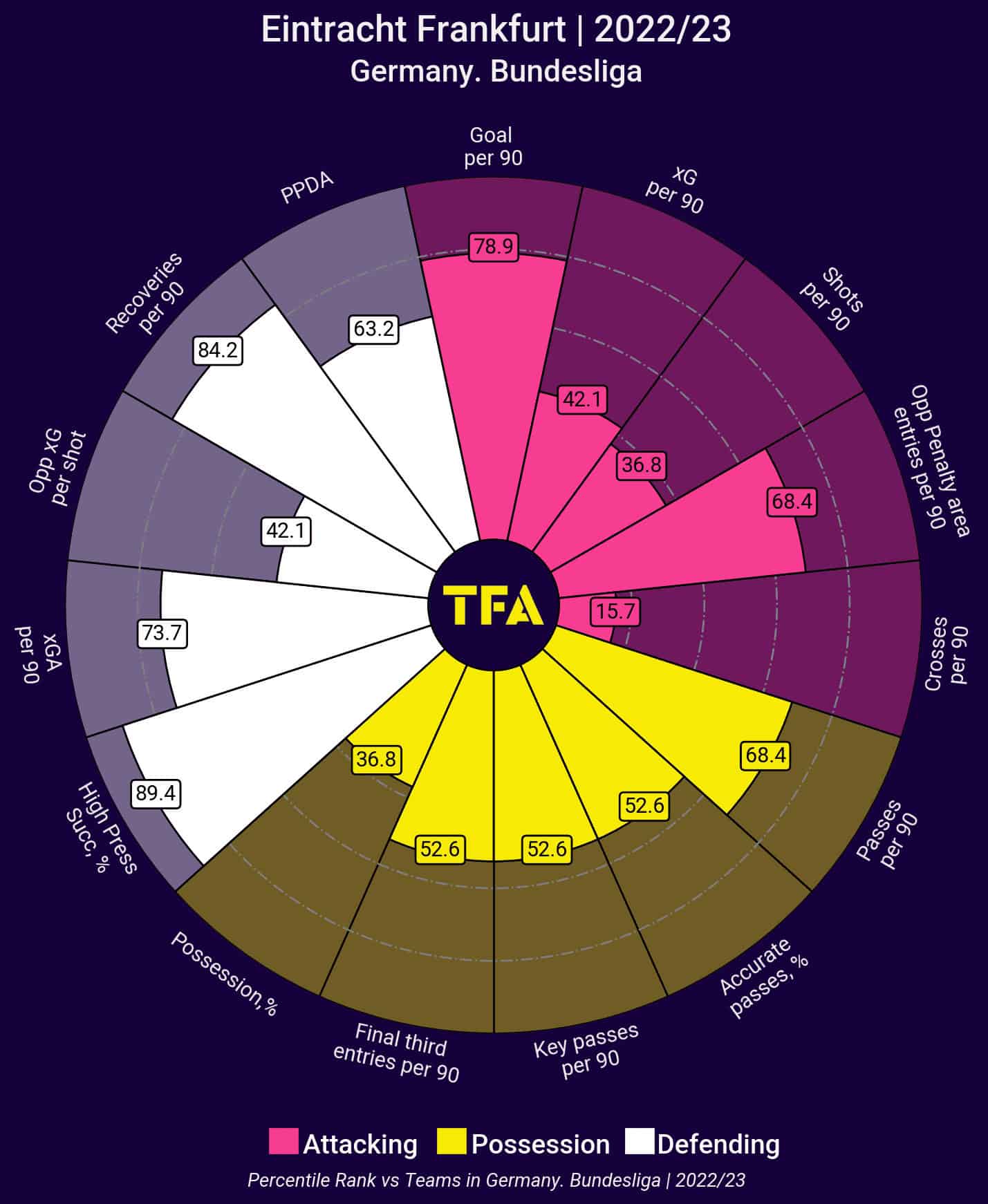
Eintracht Frankfurt embarked on their last Bundesliga season with high hopes, fueled by their previous successes and a squad brimming with talent. The team’s journey was characterised by a tale of two halves, where they experienced a stellar first half but faced challenges in the latter stages of the campaign. Despite these obstacles, Eintracht Frankfurt ultimately secured a commendable 7th-place finish, ensuring qualification for the UEFA Europa Conference League.
The early stages of the season showcased Eintracht Frankfurt’s attacking prowess and their ability to find the back of the net consistently. Led by high-quality players such as Randal Kolo Muani, Mario Götze, Jesper Lindstrom, and Daichi Kamada, the team boasted the fourth-highest goal tally in the Bundesliga, averaging 1.59 goals per 90 minutes. With a total of 58 goals scored, their attacking efficiency was reflected in their expected goals (xG) value of 54.52, indicating that they converted their scoring opportunities effectively.

However, as the season progressed and the team’s fixtures piled up across three competitions, Eintracht Frankfurt began to face challenges due to a limited squad size. The strain of balancing league, cup, and European commitments took its toll, and the squad’s depth and quality were tested. This lack of depth translated into a dip in form, particularly during the spring period, where the team struggled to maintain their earlier performance levels.
Defensively, Eintracht Frankfurt fared relatively well, conceding an average of 1.42 goals per 90 minutes, slightly better than the Bundesliga average of 1.47 goals conceded per 90. They allowed a total of 52 goals against, and their expected goals against (xGA) value stood at 46.75, indicating that their defensive performance aligned closely with statistical expectations.

However, the defensive solidity could not fully compensate for the slight dip in attacking efficiency, as the team’s defensive quality could not consistently match their attacking prowess. The imbalance between attack and defence became evident as the season progressed, highlighting the need for further strengthening in defensive areas to complement their attacking prowess.
Despite these challenges, Eintracht Frankfurt showcased several strengths throughout the season. They often dominated possession, boasting more than 51% in most matches, indicating their ability to control the game’s tempo and dictate play. Additionally, the team excelled in high ball recoveries and swiftly transitioned from defence to attack, capitalising on turnovers to launch dangerous counter-attacks.
Toppmöller’s influence
Eintracht Frankfurt’s appointment of Dino Toppmöller as their new head coach signals a shift towards an intense and passionate style of play. Toppmöller’s philosophy revolves around being “positive troublemakers”, as he said. They aim to pose problems for opponents and create discomfort through relentless pressing, structured possession, and limiting the opponent’s access to the ball. Drawing inspiration from the tactics employed by FC Bayern in the 2021/22 and 2022/23 seasons and his time at RB Leipzig, Toppmöller’s approach is poised to bring excitement and dynamism to Eintracht Frankfurt’s game in all phases.
Toppmöller’s Eintracht Frankfurt will apply relentless pressure on the opponent’s defensive structure in the attacking phase. They will employ a high-intensity pressing game, aiming to win the ball back quickly and initiate fast and intelligent attacks. The emphasis will be on creating numerical overloads and exploiting the spaces left behind by the opposition’s pressing resistance. Players like Randal Kolo Muani, Mario Götze, and new signing Ellyes Shkiri will play crucial roles in implementing Toppmöller’s attacking vision, utilising their technical abilities and positional intelligence to unlock defences and create goal-scoring opportunities.
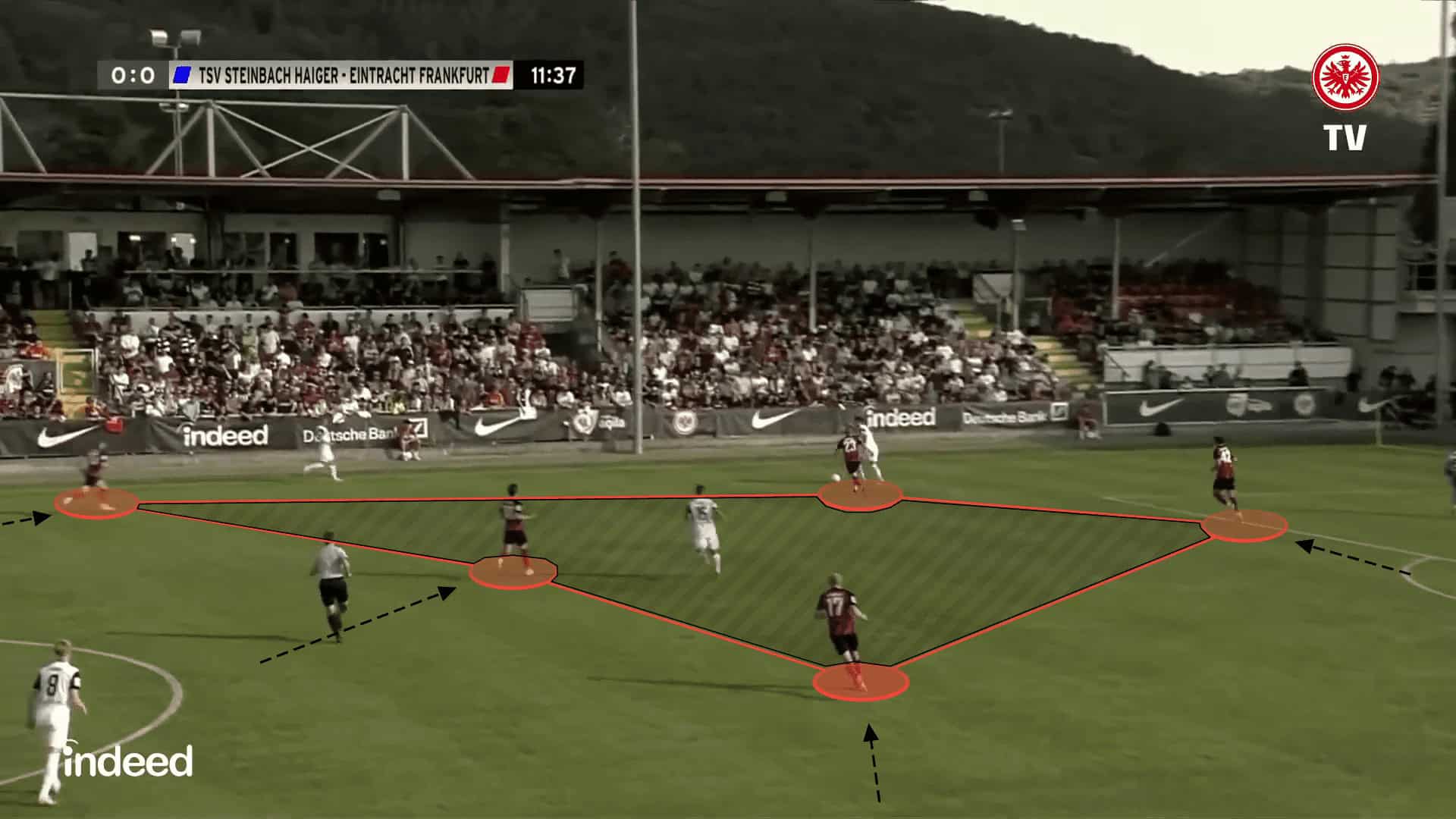
Defensively, Eintracht Frankfurt will probably strive to emulate the high defensive line seen in FC Bayern’s recent seasons. The team will work collectively to maintain a well-structured defensive shape, denying the opponent space to operate. Toppmöller’s emphasis on discomforting the opposition will manifest in a proactive approach to defensive actions, pressing high up the pitch and aggressively engaging the opponent. The defensive unit will limit the opponent’s time on the ball, forcing them into making mistakes and capitalising on turnovers to launch swift counter-attacks.
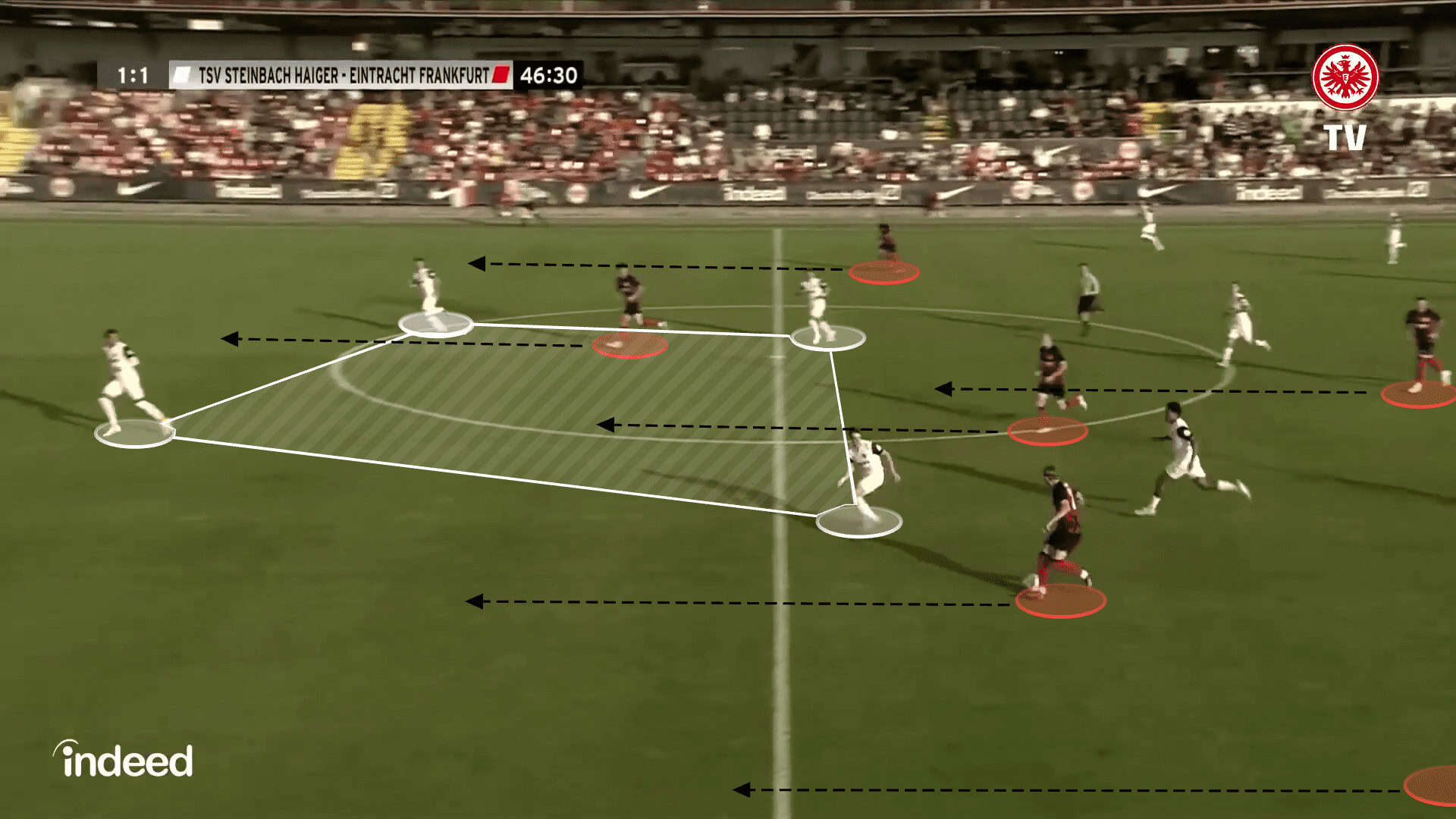
Transitions might still play a vital role in Eintracht Frankfurt’s tactical setup under Toppmöller. The team will look to exploit moments of turnover, transitioning quickly from defence to attack. Drawing from RB Leipzig’s transitional efficiency, they will prioritise swift vertical progression, utilising their attacking players’ pace and technical abilities to catch opponents off-guard. Eintracht Frankfurt will aim to create numerical advantages in these transitional moments, overwhelming the opponent’s defence and creating goal-scoring opportunities.
But the focus is on their own possession: Toppmöller’s desire to become “positive troublemakers” highlights his desire for Eintracht Frankfurt to be uncomfortable opponents for their rivals. This discomfort will be achieved through a combination of a well-structured possession game and an intense pressing approach. In possession, the team will aim to maintain a good structure, utilising intelligent positional play and adequate ball circulation to create passing options and retain control of the game. By doing so, they will limit the opponent’s opportunities to regain possession and dictate the rhythm of the match.

Transfers
Eintracht Frankfurt has made a significant move in the transfer market by securing the services of Ellyes Skhiri, who arrives as a free agent following his time at 1. FC Köln. The signing of Skhiri brings experience, versatility, and a well-rounded skill set to the club. With his knowledge of the Bundesliga, he is poised to make a meaningful impact on Frankfurt’s squad.
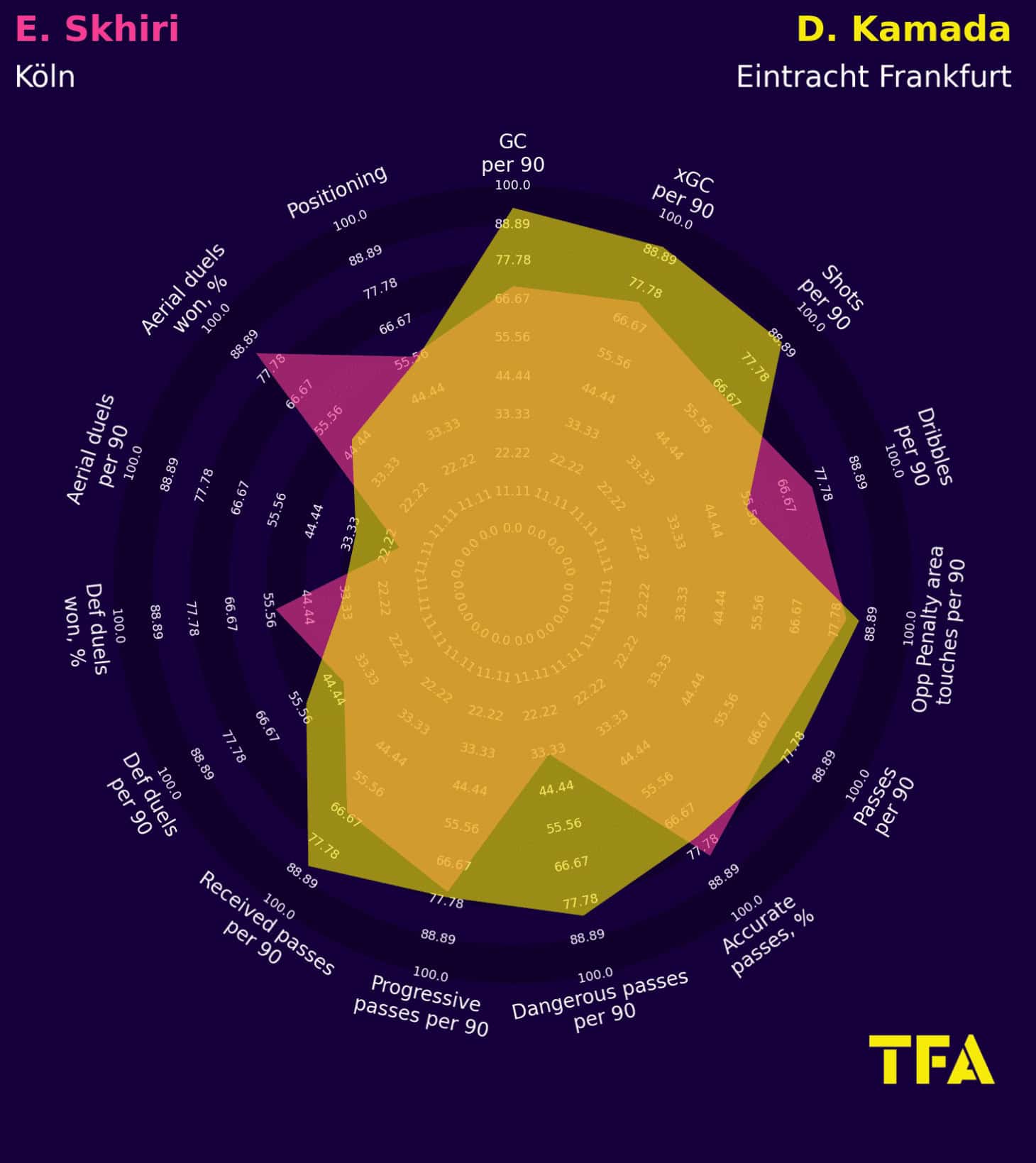
Skhiri’s arrival is particularly noteworthy as he can be considered a potential replacement for the departed Daichi Kamada. While Kamada was known for his creativity and offensive mindset, Skhiri brought a bit different dimension to the team. An analysis conducted by the xGold data analysis tool revealed an 86% similarity between the two players, highlighting their shared qualities while also acknowledging their unique attributes.
In terms of playing style, Skhiri offers a more physical presence on the pitch compared to Kamada. He excels in using his strength and athleticism to win duels, provide defensive cover, and make impactful challenges. Skhiri’s well-rounded profile enables him to contribute effectively both in attack and defence, making him a valuable asset for Eintracht Frankfurt.
While Kamada’s creativity and offensive contributions will be missed, Skhiri’s arrival ensures the team retains a strong midfield presence. His ability to contribute defensively, combined with his technical skills and tactical understanding, will provide stability and balance to the squad. Additionally, Skhiri’s experience in the Bundesliga will be invaluable as he brings a wealth of knowledge and familiarity with the league’s demands.
Eintracht Frankfurt continues to reinforce their squad in the summer transfer window with the acquisition of Robin Koch. The 26-year-old centre-back and German international joins the club on a loan deal from Leeds United. Koch’s arrival is a significant addition to Frankfurt’s defensive line, where he will form a crucial part of the team’s new defensive axis alongside Ellyes Skhiri in midfield.
Koch’s signing brings a wealth of experience and quality to Eintracht Frankfurt’s backline. Having represented Germany internationally, he has showcased his defensive prowess on the grandest stage. Koch’s ability to read the game, anticipate opposition movements, and make timely interceptions will undoubtedly bolster Frankfurt’s defensive stability.
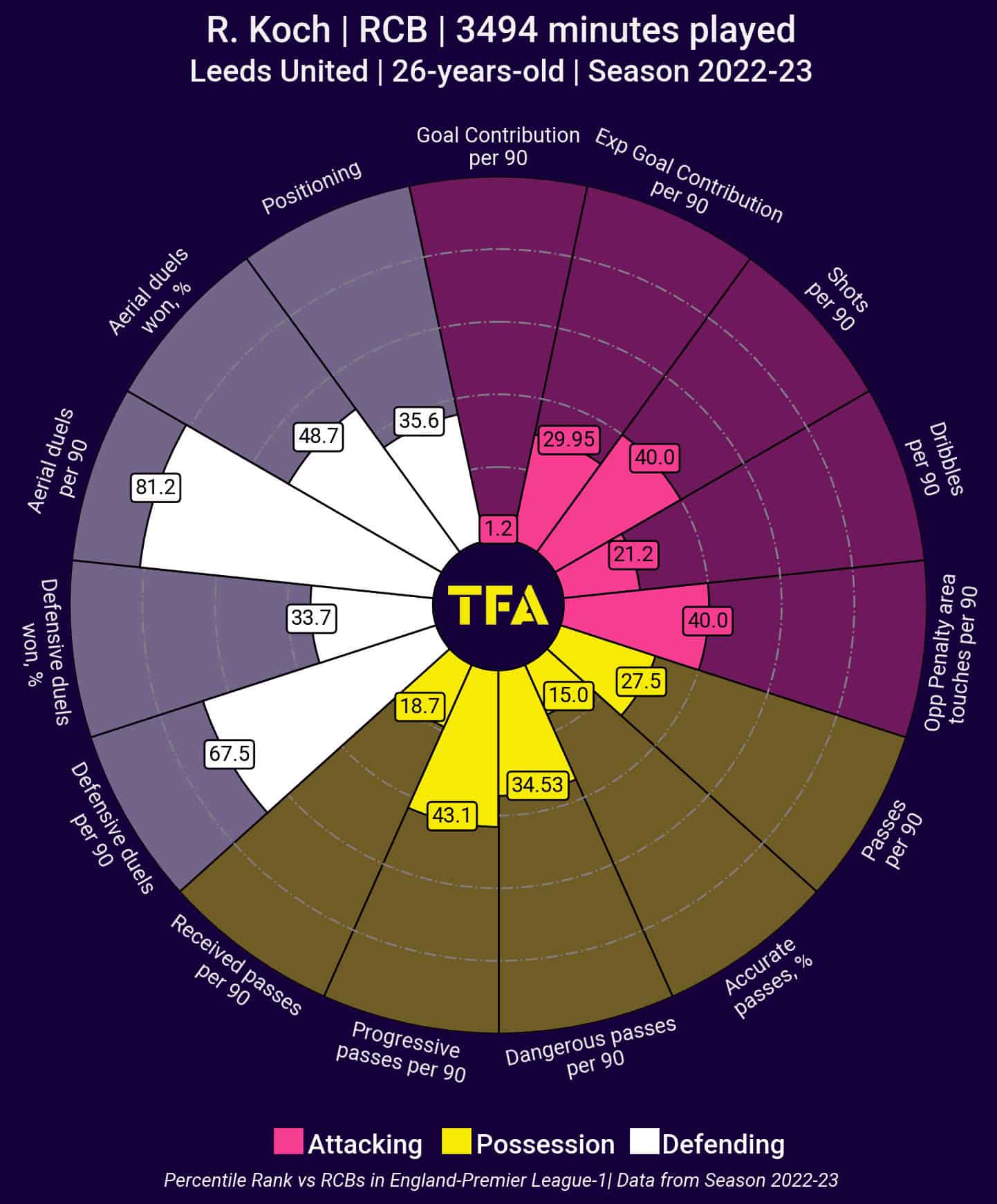
The addition of Koch serves as a strategic move by the club to solidify their defensive core. By combining his skills with the midfield presence of Shkiri, Frankfurt aims to create a formidable central axis that can effectively protect the team’s goal while also contributing to the build-up play. Koch’s composure on the ball and his ability to distribute accurately will be instrumental in launching effective attacks from the back, providing a platform for the team to transition smoothly between defence and attack. Besides Robin Koch, Eintracht bought Willian Pacho for 9 million euros from Belgium champions Royal Antwerp.
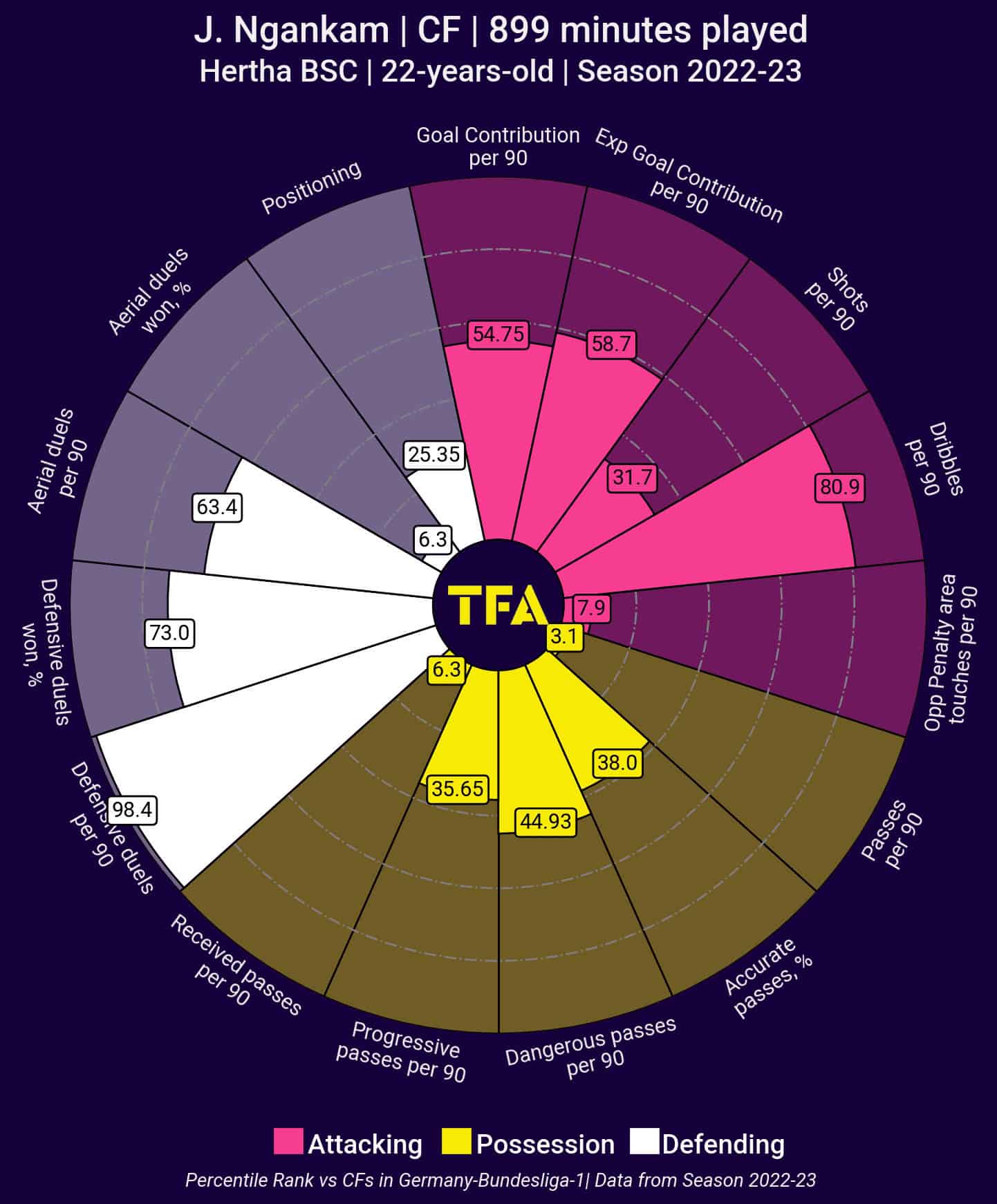
Eintracht Frankfurt has bolstered their attacking options with the signings of Omar Marmoush from VfL Wolfsburg and Jessic Ngankam from Hertha BSC. Both players bring versatility and the ability to operate as strikers or on the wings, providing valuable depth to the squad. With the potential retention of Randal Kolo Muani and Jesper Lindstrom, Marmoush and Ngankam offer ideal options to strengthen Frankfurt’s attacking capabilities.
Jessic Ngankam’s style of play aligns well with the concept of counter-pressing. He applies pressure on opponents as a pressing forward, utilising his physicality and speed to engage in defensive duels and disrupt the opposition’s build-up play. Ngankam’s willingness to dribble and eagerness to win the ball back make him an influential asset in Frankfurt’s high-intensity pressing system. His presence will provide depth in attack and contribute to the team’s defensive efforts.
Omar Marmoush, who arrived as a free agent, brings a well-rounded skill set to Eintracht Frankfurt’s striking options. As a mobile striker, Marmoush possesses the technical ability to drift out wide and participate in build-up play, creating opportunities for his teammates. His versatility allows him to interchange positions with the wingers, adding unpredictability to Frankfurt’s attacking movements. Marmoush’s experience and adaptability make him an excellent asset in the squad, offering different attacking dimensions and additional options for the coaching staff.
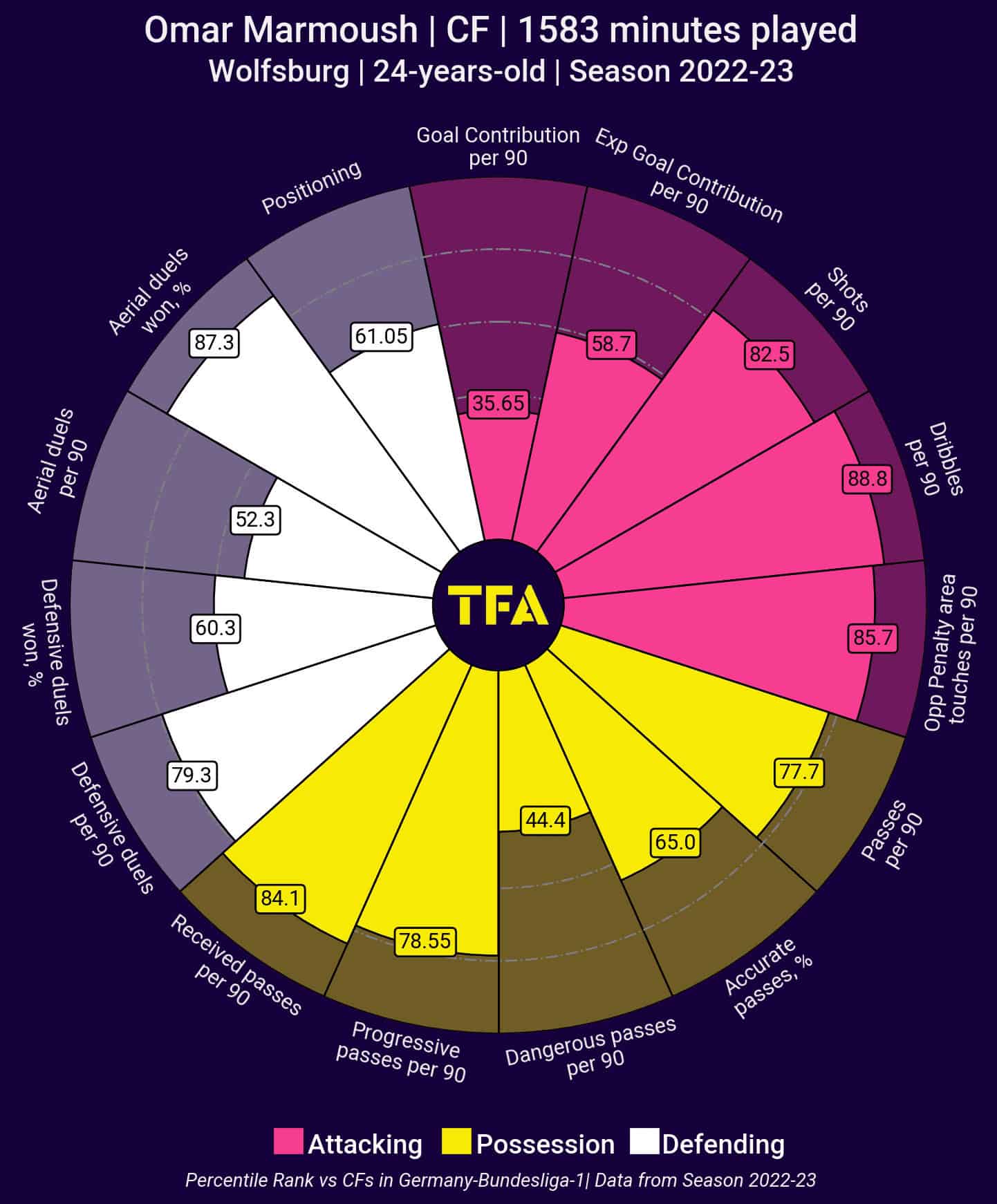
With the potential combination of Kolo Muani, Lindstrom, Marmoush, and Ngankam, Eintracht Frankfurt’s attacking options become more diverse and potent. The mix of skills, speed, technical ability, and physicality among these players provides the team with numerous attacking variations and flexibility in their approach. The squad depth ensures that Frankfurt can maintain a high level of performance throughout the season, even in the face of injuries, suspensions, or fixture congestion.
Potential Lineup
Eintracht Frankfurt is poised to enter the upcoming season with a young and promising squad, reflecting their commitment to developing and nurturing talent. They boast a youthful roster with an average squad age of 24.3, positioning them below the Bundesliga’s average squad age of 25.3. This focus on youth brings both excitement and potential for the club’s future success.
In terms of market value, Eintracht Frankfurt’s squad holds significant weight. With an overall market value of 302.35 million euros, they possess the fifth most valuable squad in the Bundesliga. Only FC Bayern, Leverkusen, Dortmund, and Leipzig have squads valued higher. This demonstrates the calibre of talent within the team and the recognition of their abilities in the footballing market. The average player market value of 7.37 million euros further emphasises the club’s valuable assets. This figure signifies the individual worth of each player within the squad, reflecting their quality and potential. Eintracht Frankfurt’s squad value is a testament to the investment made by the club in acquiring and developing talented individuals. Comparatively, the squad’s market value highlights the disparity in resources between Eintracht Frankfurt and other Bundesliga teams. For example, their squad is three times more valuable than Werder Bremen’s. This disparity underscores Eintracht Frankfurt’s ability to attract and retain talented players, creating a competitive advantage as they strive for success in domestic and European competitions.
The combination of a young squad and substantial market value bodes well for Eintracht Frankfurt’s future. Their emphasis on youth development provides the potential for long-term sustainability as the team gains experience and continues to mature together. The value of the squad positions them as formidable opponents against even the strongest Bundesliga sides.
In a potential 3-4-2-1 or 4-2-3-1 formation, Eintracht Frankfurt’s lineup showcases a blend of experience and promising young talent across various positions.
The defensive trio of Tuta, Willian Pacho, and Robin Koch form the backbone of the team’s defence. Tuta (24) has displayed maturity beyond his years, while Pacho (21) represents a promising prospect with potential for growth. Koch (26), with his Bundesliga and Premier League experience, brings a combination of solidity and leadership to the backline.
The wing-back positions are covered by Philipp Max (29) and Junior Dina Ebimbe (22). Max, known for his attacking prowess from the left flank, offers width and creativity in the final third. Ebimbe, a versatile and dynamic player, adds defensive solidity and provides an additional attacking threat from the right.
Ellyes Skhiri (28) and Djibril Sow (26) provide a balanced pairing in central midfield. Shkiri’s physicality and all-around abilities make him a valuable asset in defensive and offensive transitions. Sow brings composure, passing range, and the ability to dictate play from deeper positions.
The attacking midfield duo consists of Mario Götze (31) and Jesper Lindstrom (23). Götze, a World Cup winner with vast experience, possesses the vision, creativity, and technical finesse to unlock defences. Lindstrom offers energy, quickness, and the ability to contribute to scoring goals and providing assists.
Randal Kolo Muani leads the line (24), a dynamic and pacey striker capable of stretching defences and providing a goal-scoring threat. His physical presence and ability to run in behind the defensive line make him an integral part of the team’s attacking setup.

As mentioned, this formation can also switch into a 4-2-3-1, with Ebimbe and Lindstrom operating as wingers. They utilise their pace and technical abilities to provide the width and support the central attacking players. Götze would then slot into a central playmaker role behind Kolo Muani, orchestrating the team’s attacks with his vision and creativity.
Eintracht Frankfurt’s potential lineup in a 3-4-2-1/4-2-3-1 formation showcases a well-balanced squad with a mix of seasoned professionals and promising young talents. This lineup provides flexibility, offensive firepower, and defensive solidity, enabling the team to compete at a high level in both domestic and European competitions.
Conclusion
Under Dino Toppmöller’s guidance, Eintracht Frankfurt looks set to adopt a dynamic and proactive style of play, drawing inspiration from FC Bayern’s and Red Bull’s tactics in recent seasons. With a focus on being positive troublemakers, the team will aim to pose problems for their opponents through intense pressing, a well-structured possession game, and a commitment to discomforting the opposition. As Toppmöller’s tenure unfolds, Eintracht Frankfurt fans can expect an exciting brand of football that combines tactical astuteness with passion and intensity.
As the upcoming season approaches, Eintracht Frankfurt’s young and valuable squad will seek to build upon their recent successes and establish themselves as a force to be reckoned with. With talented individuals contributing to the team’s collective strength, the club aims to challenge for top honours and continue their upward trajectory in domestic and European football.
